The story of wedding rings in different cultures of the world
“The meeting between two people is like the contact between two chemical substances: if there is a reaction, both undergo a transformation.” - C.G. Jung
Love can be a universal language, but wedding customs and traditions are as diverse as humanity itself. All around the world, a multitude of customs are uniquely expressed through wedding rings that hold significant cultural value, giving rise to ancient traditions.
A little history that begins with Ancient Egypt
It is believed that engagement rings originated in ancient Egypt, where circles were interpreted as a symbol of eternity. Future ancient Egyptian couples exchanged “rings” made of woven reeds, which were then worn on the left hand.
It is said that the left hand has a vein called the “vena amoris” that goes directly to the heart. Even in ancient folklore traditions, the heart represents love and fidelity, and that is why the wedding ring should be worn on the nerve of the “heart” that runs through the third finger of the left hand.
Norway
Norwegians do not celebrate their marriage only through the exchange of wedding rings. During the wedding party, Kransekake is served, a Norwegian cake made of almonds that resembles a tower made from stacked pyramid-shaped rings of baked dough in various round sizes. Sometimes they even build a tower of tasty rings around a bottle of wine.
In Norwegian culture, both wedding rings and conventional engagement rings are worn on the finger. But, like their Scandinavian neighbors, men also receive an engagement ring just like brides do.
Chile
Scandinavians are not the only ones who have engagement rings for both sexes. In Chile, men and women give each other engagement rings and wear them on the right hand. As part of the wedding ceremony, they take the ring off the right hand and move it to the left hand.
Kenya
Couples in Kenya solidify their union with elaborate jewelry instead of wedding rings and rings with precious stones. Decorative beads have long been part of African culture.
Each group, region, and African religion plays an important role in the colors and types of adornment. Even the climate of the region plays a role in the materials used to make the jewelry.
Japan
The exchange of wedding rings was not a custom in Japan until recently. In a traditional Shinto wedding, the ceremony takes place in a Japanese shrine, set in nature, followed by a purification ritual for the couple, called sansankudo, in which the couple drinks three cups of sake of different sizes.
Currently, most young people in Japan choose to marry in a modern style, placing more emphasis on the sacredness of love, while still adhering to traditional customs.
Ireland and Scotland
The Claddagh symbol is an ancient Celtic triquetra that personifies marital fidelity, illustrated by the heart, friendship - the two hands, and loyalty - the crown above the heart.
For the engagement party, the Claddagh ring is worn on the left hand with the crown facing the arm, indicating that the wearer is still unmarried, while the crown facing the fingertips shows that the two hearts have united forever in the mystery of marriage.
Russia and France
Russian and French-style wedding rings come in a wide variety of designs. In France, the wedding ring is often a family heirloom. Unlike other Western countries, the engagement ring can have precious stones such as rubies, emeralds, or sapphires instead of traditional diamonds.
In Russia, wedding rings were made of three thin rings made from different materials - yellow, white, and pink gold - that were braided to form a single ring. This ring design was intended to represent the Holy Trinity of the Orthodox Christian religion or an interpretation of the couple's past, present, and future. Additionally, there were no stones set in the ring, although today, wedding rings can be made from a single precious metal and may have diamonds.
Wedding rings and engagement rings are far from a modern invention. Their origins stretch back thousands of years and have evolved over time through contact with dozens of cultures, customs, and traditions.
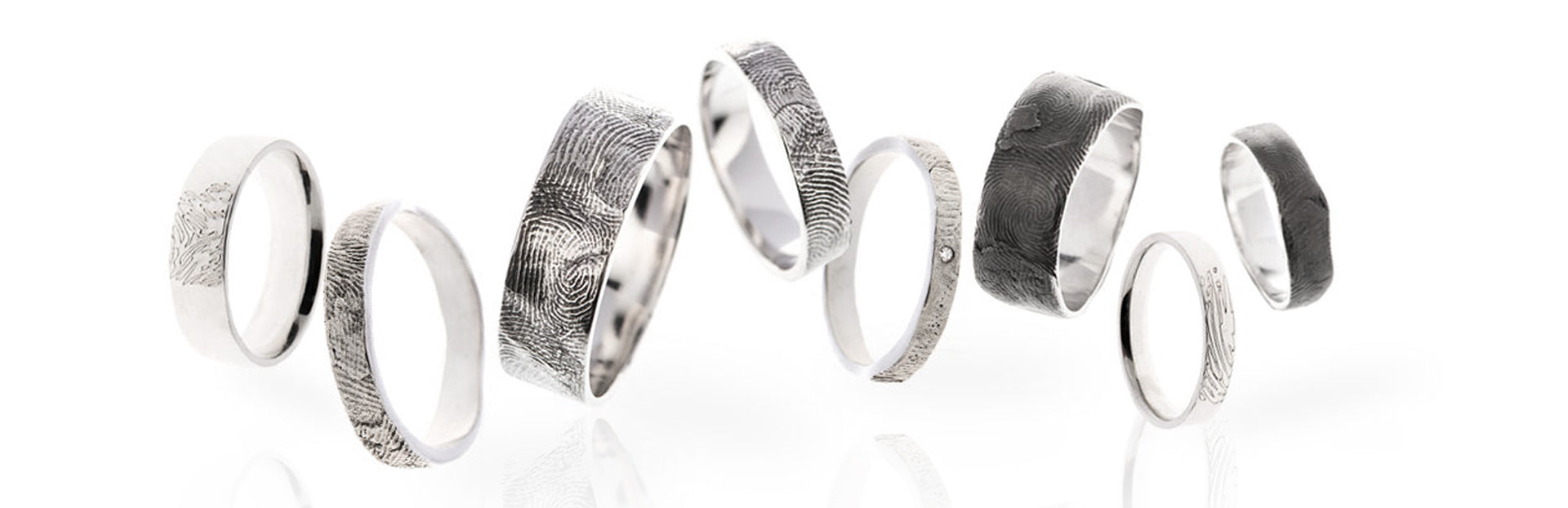
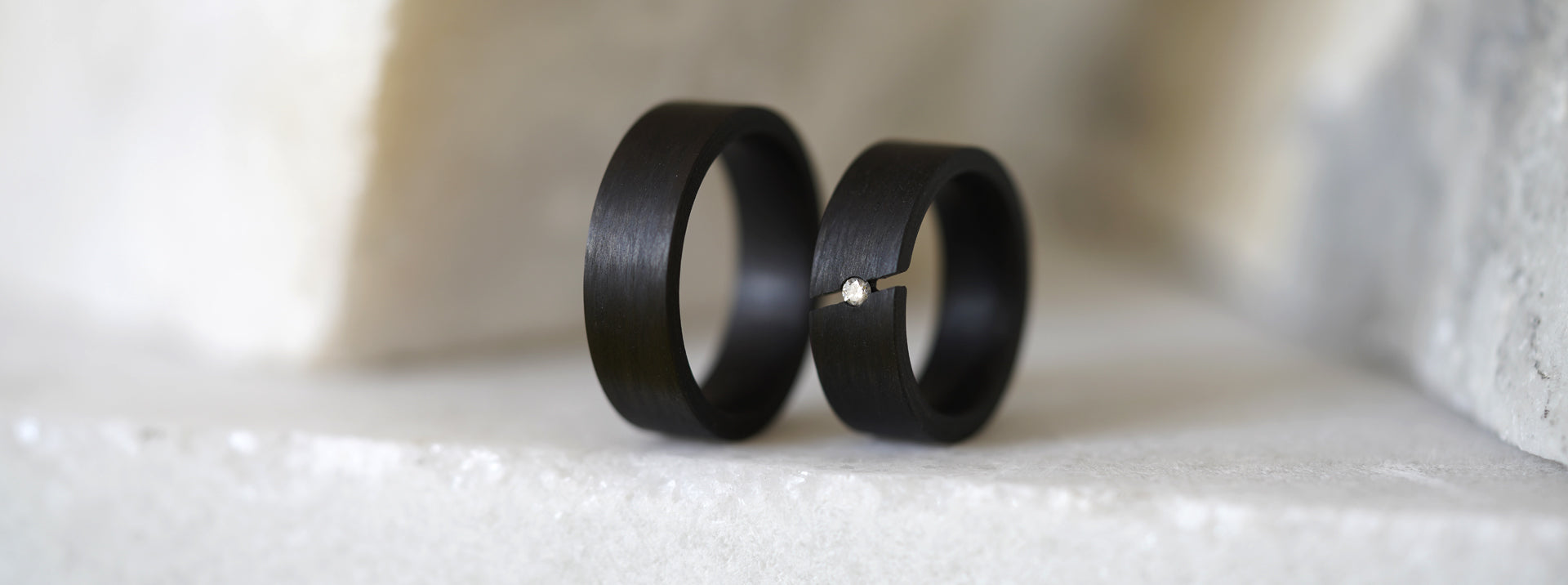
At MOOGU, you will find collections of wedding rings that evoke strong emotions, centered around the love from which everything begins. These collections of emotions await you, wrapped in gold and other precious metals, as well as in stones that shine eternally - diamonds, rubies, emeralds, and sapphires.
Let yourself be inspired by the story of MOOGU wedding rings!