
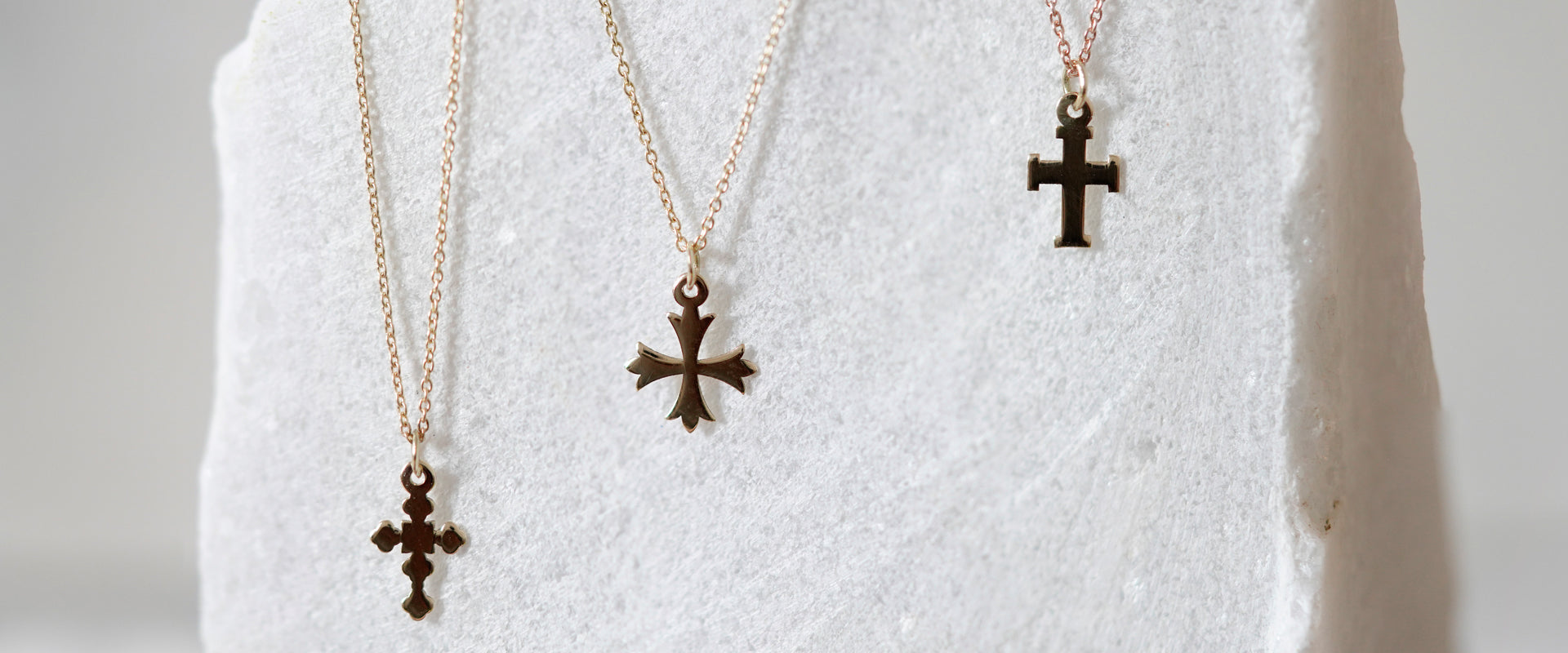
Crucifixul, cel mai folosit simbol în fashion și în bijuterie
Crucifixul (din latină cruci fixus, "pironit pe cruce") este cel mai comun tip de cruce catolică, reprezentarea în sculptură a lui Iisus Hristos răstignit pe cruce. Primul crucifix cunoscut datează din anul 400 d.Hr.
Crucifixul este asociat cu o multitudine de rituri, mituri, legende ori superstiții și de-a lungul istoriei sale bogate, a fost folosit în mod constant ca formă de decor, în designul caselor și a lăcașurilor de cult și, desigur, a devenit un motiv popular pentru bijuterii.
Crucile au fost dintotdeauna elegante, frumoase, uneori luxoase, chiar și cele mai vechi cruci fiind unice prin stilul lor. În cultura ortodoxă crucea a fost întotdeauna văzută ca ceva intim, ceva ascuns la vedere, numai preoții aveau voie să o poarte pe exteriorul hainelor.
Însă de-a lungul timpului, moda a creat noi reguli și a introdus epoca decolteului (Evul Mediu târziu și Epoca Victoriană), ceea ce a înseamnat că păstrarea unei cruci ascunse de vedere nu mai era o posibilitate. Așa că de multe ori crucea făcea parte din colierele afișate în jurul gâtului femeilor nobile. Astfel crucifixul a devenit probabil cel mai obișnuit articol de bijuterie - literalmente toată lumea avea unul. Această omniprezență a provocat o cerere uriașă, ceea ce a făcut ca tot felul de designeri și bijutieri să își îndrepte atenția către acest simbol.
Spectacolul lui Dolce & Gabbana din 2013 pentru Săptămâna modei din Milano a fost probabil cea mai mare expoziție de bijuterii cu cruci până în prezent și poate cea mai clară dovadă a transformării de la un simbol pur religios la ceva pe care majoritatea oamenilor îl văd ca un accesoriu de modă.
Există multe evenimente și sărbători care sunt potrivite pentru a oferi un crucifix drept cadou: Crăciun, Paște, Botez, prima împărtășanie ori absolvirea facultății (ne amintește cum putem realiza orice atunci când avem încredere într-o putere superioară). Iar variantele pentru a oferi acest simbol sunt numeroase: de la coliere din oțel inoxidabil și până la pandative cu pietre prețioase ori inele.



%20este%20cel%20mai%20comun%20tip%20de%20cruce%20catolic%C4%83,%20reprezentarea%20%C3%AEn%20sculptur%C4%83%20a%20lui%20Iisus%20Hristos%20r%C4%83stignit%20pe%20cruce.%20Primul%20crucifix%20cunoscut%20dateaz%C4%83...)